How film collected in Latvia becomes “Labais Maiss”
.png)
Large volumes of plastic film accumulate in Latvia every day — both in agriculture, and in retail and warehouse logistics. If collected correctly, plastic film is not "waste." It is a raw material that can be returned to the cycle as a practical product.
Galangal takes a simple approach to this flow: collect → sort → prepare for recycling → bring back to life.
Where does the plastic film come from
There are two main sources:
- Farmers: bale wrap, agricultural film, big bags (e.g., for fertilizers).
- Retailers and warehouses: packaging and pallet wrap, various types of film packaging.
Plastic film can be collected regularly by Galangal transport or dropped off by prior arrangement at our site in Cēre parish, Tukums municipality ("Sprīdīši").
How collection and logistics work
Depending on the client's situation, we select the appropriate collection method:
- Compactor containers (16 m³ / 20 m³) for businesses with regular volumes
- Crane truck collection (especially convenient for farmers when film and bags pile up)
- 240 L and 1.1 m³ containers, for convenient on-site collection
- SMS fill-level monitoring for compactor containers, allowing for collection scheduling so clients are never left with a full container
Important detail: Galangal service includes compactor container replacement/collection within 24 hours.
What makes “Labais Maisas” a true circular product
“Labais Maisas” is not just a waste bag. It is a product manufactured from packaging/film collected from our clients, effectively closing the circular loop in Latvia.
This means:
- film is collected from businesses and farms,
- prepared for recycling,
- and returns to the market as a practical, everyday product.
This is also the reason why “Labais Maisas” is recognized and popular in Latvia — it is a story about concrete results, not promises.
What “bringing back to life” means in practice
Film waste management is more than just collection. For it to become a product, the process requires discipline:
- Collection (press container / manipulator / delivery)
- Sorting and preparation (to ensure the material is suitable for recycling)
- Further processing into raw materials and product manufacturing
- Final product — for example, “Labais Maisas” waste bags
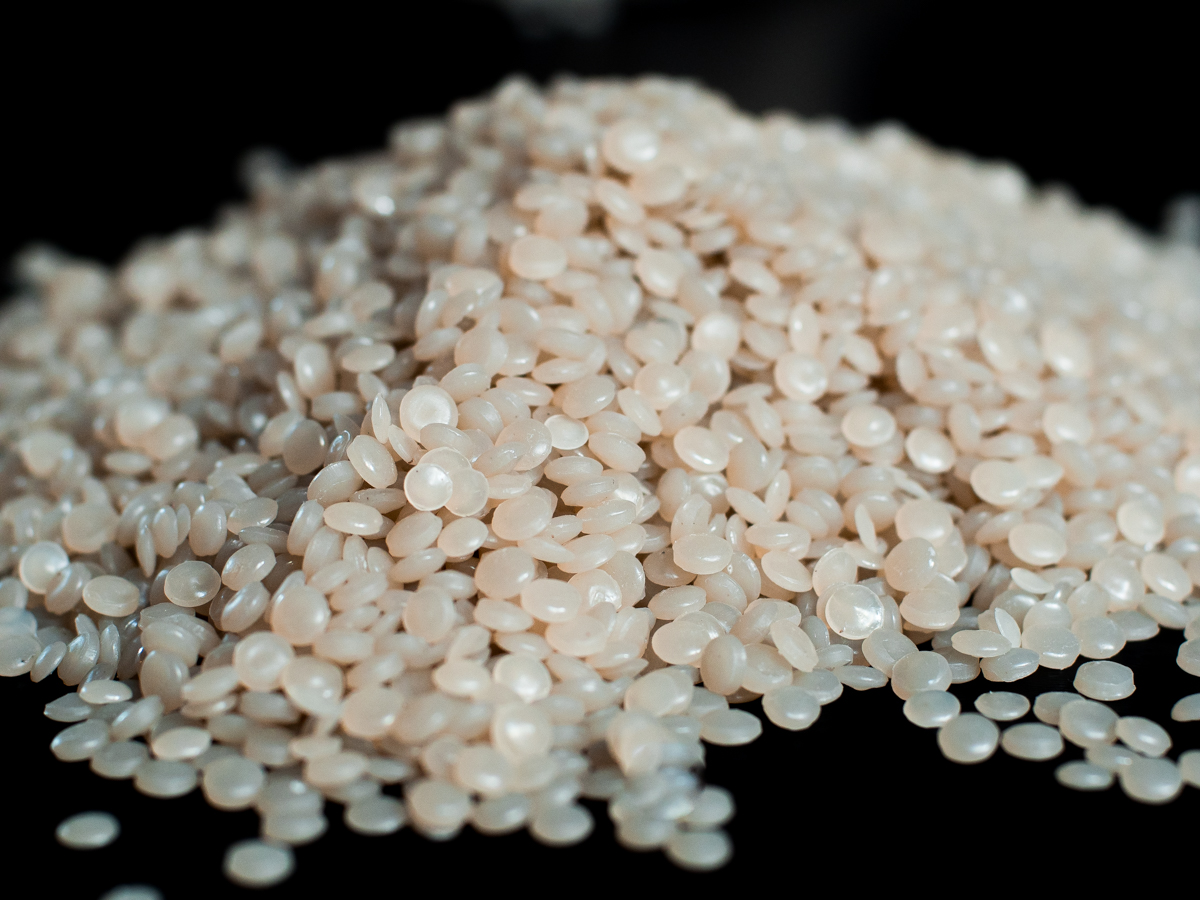
In parallel, Galangal is also developing the next step in the film supply chain — film pellet production (planned for 2026–2028), so that an even larger portion of Latvia’s film waste remains in the loop as raw material for production.
What you can do to ensure film is recyclable
If you want the film waste stream to truly work, the most important thing is one: aligning the material type and volume.
Tell us what kind of film and how much is generated, whether it is generated regularly or periodically, and Galangal will find the right collection method (press container, manipulator, transport, or delivery).